Showing posts with label Children's literature. Show all posts

Picture Books for Upper Elementary

Hi everyone! This is Aileen from Mrs. Miracle's Music Room. I've blogged quite a bit about picture books for the music room (see those posts here), but today I thought I'd focus on picture books that can be used with upper elementary, since they can be harder to come by!

Here are some of my favorites...I'm planning on posting about some more soon! Click on each picture to view it on Amazon or Alibis.

"If you find a Rock"
by Lember and Christian

I found this picture book a few years ago, and immediately thought that it would work really well with "Obwisana," which you can find here. It is such a beautiful book, with poetic language and higher level prose.


"Before John as a Jazz Giant"
 by Weatherford and Qualls
I'm a big jazz fan, so was super excited to find this book! What a great way to incorporate jazz into your lessons and teach a little history! I plan on using this soon, and am thinking of playing John Coltrane as I read the book.

"The Drums of Noto Hanto" 
by James and Tsukushi
Based on a true story in ancient Japan, this book is a wonderful way to introduce taiko drumming to your students. I've read this book to my 4th graders (and even created a program based off the book and had them act it out) and they were actively engaged and excited! You could read it before a taiko or bucket drumming unit, or before a taiko drumming listening lesson.

"Marching to the Civil War: Drummer Boy" 
by Turner and Hess

I really love this book as a way to delve into the song "Fire in the mountain," which you can see below:

To play the game, one student stands in the middle, playing the drum to the beat. Half of the students stand, and half of the students sit. As the drummer plays, the standing students walk around the circle. Whenever the drummer stops (halfway through the song, at the end of the song, halfway through the second time...whenever!) all the standing students have to find someone to stand behind. The drummer also has to find someone, so one person is left without someone to stand behind (much like musical chairs.) Then, that person becomes the drummer, and the sitting students stand, the standing students sit, and the game continues.

The song is actually about the Revolutionary War, but the book is a great connection about what drummer boys had to do. I will warn you...it is a sad book with very real sentiments, as the drummer boy laments about the sounds of war, and about his friends who have died. I have had to be careful to not get choked up as a I read it to students. That being said, I think it is a great book for students to read, as it gives them perspective about how much life has changed over the years, and gives them some historical context behind a song they love.

Looking for more picture book ideas? Here is one of my Pinterest boards, focused on picture books:


What are your favorite picture books for upper elementary? Feel free to comment below!


1

Books for the Music Room

Hello and happy summer! This is Tanya from Tanya's Kodaly-aspiring classroom.

This summer my family and I have tackled purging many things from our house, including books.
It pains me to get rid of any books but my children are five and nine and some of the board books and picture books need to go to make room for (slightly) more mature books. (Sigh!)

Luckily, as a music teacher, I still get to hang on to several books that have played a role in the music room! Including a book reading in my already packed lessons is often challenging but sharing great books is always worth the time. I strive to include at least one book a month with 2nd through 4th grade and more with 1st grade. I also read to my 5th and 6th graders; yes, even the big kids love a great picture book as long as it's age appropriate! Here are just a few of my favorites.

Books for the music room: Great picture books for melody, rhythm, and more!

The Ants Go Marching

I save The Ants Go Marching for the 100th Day of School celebration. Students love to count the ants on each page and find "the little one" among the others. The minor melody (from When Johnny Comes Marching Home,) is easy for children to latch on to and most are singing along by the third page. (And isn't it refreshing to sing a minor song with the little ones?!)

Books for the music room: Great picture books for melody, rhythm, and more!

Jennie Jenkins
All of the John Feierabend folk song book adaptations are worth having and this one is my new favorite! The illustrations are delightfully colorful. Immediately after reading Jennie Jenkins to one of my 1st grade classes several students clamoured, "Can we read it again?" (And we did!)

Books for the music room: Great picture books for melody, rhythm, and more!

Musicmap Series Books
Have you see these brilliant books? At first glance they seem like your basic "song lyrics turned into a book," however, each book includes the melodic contour with icons from the illustrations!

Books for the music room: Great picture books for melody, rhythm, and more!

"Up above the world so high, like a diamond in the sky."
I picked up The Goldfish Family (a traditional Japanese folk song,)


and Burung Kakatua (an Indonesian song,) at the OAKE conference last March.


Each Musicmap book includes an orchestrated recording of the song (including a child singing,) that I might play for students after they are familiar with the melody.

Books to listen to
My belief is that most books should be sung to children, (music teachers have a unique opportunity and obligation to expose children to live music in class,) but there are books that include unique recordings that should be heard!

Abiyoyo
Sure, I can sing the african lullaby Abiyoyo and read this to my 1st graders, but Pete Seeger was a brilliant storyteller who should be heard, remembered, and revered. (Additionally, I'm not the banjo player he is!) The included CD has two tracks of Pete narrating and singing the story. The second track is live from a 1980 concert and, fair warning, Pete does say "damn ukulele" in that telling, (it's "darn ukulele" in the first track.)

Books for the music room: Great picture books for melody, rhythm, and more!

Abiyoyo was featured on Reading Rainbow and you can watch Pete narrate the story here.


No Mirrors in My Nana's House

This simply illustrated book beautifully accompanies the recording by Sweet Honey in the Rock.

Books to play (on instruments)

Possum Come a Knockin'

Here is an opportunity to actively and musically involve students during a read aloud. After each "Possum come a knocking' at the door," students play twice on claves or rhythm sticks.
You can also add some doorbells by having students play on tone chimes ("sol mi!")
 

Hand Hand Fingers Thumb and Click Clack Moo 
Here are two more books that are great fun for students to play along with on small percussion instruments.


Both Hand Hand Fingers Thumb and Click Clack Moo are books that could easily be turned into performances/mini-musicals. (Adapting children's books into student performances is another whole blog post!)

Brown Bear, Brown Bear, What Do You See?
I use this book in 1st grade when we are working on melodic question and answer.
The students quickly fall into singing the answers:
When we work on do in 2nd grade we revisit Brown Bear and play the question and answer on the barred instruments. Initially all students learn to play the answer, then all students learn to play to question. Finally, I have half the class play the question on metalophones and glockenspiels and half play the answer on xylophones.


Books to inspire/Books for older kids

Books for older students usually require more of a time investment but can provide a wonderful doorway towards class discussions on the value of music personally and in our society.

The Bat Boy and His Violin

This story set in 1948 features Reginald, a boy who just wants to play his violin. His dad, a manager for a team in the Negro Baseball League signs Reginald up as bat boy for the team.

Books for the music room: Great picture books for melody, rhythm, and more!

Lemony Snicket's The Composer Is Dead

I really love this book! I teach 6th graders at my school and this seems to be the age where many children start understanding and developing a subtle, slightly dark and twisted sense of humor. Oh, I'll just say it: snarkiness ensues! And no one has perfected snarky quite like Lemony Snicket!
(A favorite joke early in the story: "The violin section is divided into the First Violins, who have the trickier parts to play, and the Second Violins, who are more fun at parties.")
This is one you'll want to listen to; the narration and original score flow nicely together.
Indie music geek comment: The illustrator is Carsen Ellis who happens to be married to the lead singer of one of my favorite bands, The Decemberists. She has illustrated several of their album covers as well.
It's been interesting to see how her work has evolved. 

I consider the above list a "Whitman's Sampler" of favorite books; there are so many more that could be included here! What are your "must read" books for the music room?

2

Think~Pair~Share In the Music Room

Hi everyone - this is Karla from CMajorLearning. Wow - things are in full swing for me now and I thought I would share with you what I’ve been up to this past week in my classroom!

I will start out with the professional development day held in my district this week.  A bit of background info, the Canal Winchester Schools received one of 32 Straight A Grants from the state of Ohio.  The purpose of the grant was to create innovative teaching using technology.  We received over $850,000 to put into K-5 teaching initiatives, technology and professional development!  I am fortunate enough to be on the district committee as well as the core innovation team at Indian Trail Elementary!

Now - that money will make a HUGE difference in our schools in the long term, but in the short term, the district has decided to align with the grant initiative and focus all of our professional development on project based and inquiry based learning to support the innovative teaching from the Straight A Grant.  We had our first pd day this week and it was fantastic!   Why am I telling you all of this?  Well, I feel that as Kodáy inspired teachers, we are, for once, a little bit ahead of the curve!  As I sat through the training, I was super excited to see that a lot of the teaching strategies are partially or completely in place in my classroom just because of the Kodály approach! They may be called a different name and done in a slightly different format, but this active, hands on learning is happening on a daily basis!

As a result of this training, I decided to really look at my teaching this week and see what I was doing that was supporting our district professional development goals.

First, I have been working with my 2nd graders on ta and ti-ti review super heavy.  Two lessons ago we did a musical version of ‘Write the Room”.  
This activity is done a lot in the regular classrooms and I decided to try it in the music room albeit, with a twist.  In the activity, the students get a clipboard, pencil and recording sheet.  They search the room for what they are instructed to ‘write’ from the room.  In my case, I made it ta and ti-ti flashcards and they had to find them all over my room.  I was so pleased to see how the students were engaged and QUIET during the activity - the loved it!  You can check out the files I used at my TpT store by clicking the here. 

The students wrote the room and I collected the papers to review and grade.  Most students matched the correct rhythms with the correct boxes - yeah!  This week, I passed back those papers and the students were asked to “Think - Pair - Share”.  To make it work in the music classroom, I had the students get with a partner of their choosing (having talked about partner choosing before this was an easy task for my kids - it may not be for you if you have not done partner choosing before).  I then had the students ‘think’ through their rhythms by saying them inside their heads.  We then ‘paired’ and read the rhythms together one by one (there were 10 on the recording sheet).  Lastly, we ‘shared’.  Here is where I made a little bit of a change.  My kids LOVE mystery songs so I had them do mystery patterns with their partners; one student clapped a mystery pattern (one of the patterns on their recording sheet) and then the second student had to solve the mystery by identifying the pattern that was clapped; then they switched jobs. It was AWESOME to walk the room and watch the students go through this process and see so many levels of learning taking place!

I’m going to continue this idea next week by doing some rhythm squares activities as a whole class, where students are the leaders for the entire group and then relate the patterns to known songs!  A few of the kids already did this in their “Think - Pair - Share” time and they were super excited to share their discovery with me!!  You can check out the Rhythm Squares activity here. 
The other activity that I did relating directly to my professional development this week was with my first grade students.  Unfortunately, there was no sub for the PE teacher during the afternoon on Friday.  In my building the PE teacher and I work very hard at providing a related arts class for every kid every day.  So when there are no subs for any of the four of us (music, pe, art and social skills), we take each others classes.  Our daily schedules are the same, so this happens very easily as the classes just go to a different class when this happens.  I had 2 first grade classes at a time (around 50 kids) in my room.  Not being one to just put a movie in and call it a day, I decided to do something productive yet different with the classes.  We went on a listening walk!  

First, we read the book The Listening Walk by Paul Showers, illustrated by Aliki (click here to find it on Amazon). 
I only had a small paperback copy of the book and it would have been hard for everyone to see, so what to do?  Well Google it of course!!!  I found a very nice youtube version of the book to project onto the smart board and everyone could see it!  (click here for the link to youtube).   The kids LOVED it - they were listening, laughing and making sounds right along with the story.  At the end of the book, it asks the reader to just listen when they are done - so we did just that…..over 50 kids sitting in the music room absolutely still for almost a minute!!!  Just listening!  It was amazing!

Since it was such a nice day here in central Ohio, we then went on a listening walk around our school building - again over 50 kids walking in side by side lines around the school in silence!!!  It was amazing!  At the end of our walk we ended in a double circle under a shade tree.  We used the same “Think - Pair - Share” strategy listed above.  The students thought of 3 sounds they heard, turned to the person behind them (someone in a different class) and then shared their 3 sounds.   We had odd numbers in each class so I didn’t get to walk around and simply listen to the conversations but I could hear lots of great talk while I was listening to my partner.

What activities do you do that are problem based or inquiry based?  I’m only at the beginning of my learning with this but can foresee so many amazing and NEW stratigies happening in my classroom!!!  Please share your experiences through the comment section below - I would LOVE to know other ideas!  We can do our own “Think - Pair - Share” activity!!!
6

Great Books, and All That Jazz!

Happy Summer! This is Tanya from Teaching Music: Tanya's Kodály Aspiring Blog. 
School is out and I love that I don't have to set an alarm clock, (well, my children still provide alarm clock service!)

My slowed down day to day brings to mind that iconic song, Summertime.
"Summertime and the living is easy. Fish are jumpin' and the cotton is high..."

One of my favorite end of the year activities is reading this book to my 6th graders before they leave elementary school:

The artwork in this book is just gorgeous! When I "read" this book I turn the pages and let Ella Fitzgerald and Louis Armstrong sing.  Their version of the Gershwins' Summertime is my favorite.  The lush orchestration of Ella and Louis's Summertime and these illustrations go together beautifully. Make sure the students listen closely for the very end of the piece, in the last eight seconds, when the piano strings are lightly strummed from low to high. 

At my school we briefly study jazz in 6th grade. Jazz began as an american genre and part of our heritage that we should embrace. So much of our cultural and political history can be explored through jazz that I often have trouble with what to leave out. During our jazz unit I sometimes feel like more of a social studies teacher. That's one of the wonderful things about teaching music; the opportunity to show how music relates to everything else in our daily lives. But, of course, my main mission is to expose my students to some of the jazz "gems" they should be familiar with. 

To that end, here are a few books that tie jazz to art and poetry.
(Clicking on the image of the cover will bring you to purchase info on Amazon.com)


Hip Cat by Jonathan Londan and Woodleigh Hubbard tells the story of a down on his luck sax cat who works hard and eventually finds success in playing his music. The ultra hip beat poet style of the story is very appealing to kids. Read this out loud to students with the cool, suave expression the text demands! We listen to John Coltrane's Giant Steps after we read the book.

Speaking of John Coltrane, his recording of My Favorite Things is an excellent piece for students to hear and compare to other versions they may know.
I read this book to younger grades and we bring it back later while we're re-visiting the song:


My students are always fascinated by Louis Armstrong, especially when we watch videos of him performing. This book What a Wonderful World takes the lyrics and shows a group of diverse children putting on a puppet show centered around Satchmo through bright and colorful illustrations.

This book is a very lyrical poem with rich, sophisticated illustrations. I read this while playing Miles Davis's "All Blues," in the background. (And how can you resist the line "i got 15 trumpets where other women got hips"!)

There are also several wonderful biographies of jazz musicians that are worth sharing with children that I haven't mentioned here. That may be another post for later!

Do you have jazz books that you love read to classes? Please comment and share!

1

Thoughts on a conference: KMEA

Hi everyone! This is Lindsay from Lindsay's Kodaly-inspired classroom. This past Thursday through Saturday was our state music conference, KMEA, in Kansas. This time is always such a nice time to get pumped up again, rejuvenate, and get some fresh ideas for teaching.

Below are some of the great ideas I collected from the conference plus a few great finds at some of the booths. You can check out my blog, Pursuit of Joyfulness for even more thoughts on the conference (coming soon).

The presenter I was most looking forward to seeing was Andrew Ellingsen. He presented in Wichita last May and if you haven't seen him yet, you need to!

He presented two sessions, one on sequencing movement and another on play. Two things I hold so near and dear to my teaching.

Before I started teaching at my current school, I had never done much in the way of folk dancing with my kids and it was not something I had been exposed to prior to that, but they had a tradition of having a square dance night the week of Kansas Day at my school and I was in charge of teaching each grade level a dance to perform on the stage in front of parents. It is a huge fundraiser for our school and coincides with a book fair on the same night!

When I found out I was going to be in charge of this, I called upon a good friend, Hannah Northerns, who is currently our KMEK president. She came out to my school and presented a folk dance to each grade level. I video taped her so that I could remember all the steps and the sequence she used for teaching each dance. Each summer during our Kodaly training at Wichita State University there has been a special topics on folk dancing and I have been able to expand my knowledge on dancing, teaching, and repertoire.

When Andrew presented he laid out for us a sequence for teaching movement in circle dances and explained that in the same way that we prepare, present and practice rhythmic and melodic concepts, that movement should have a sequence too.

He suggested the following circle dance sequence:
1. Chasing circle games "duck duck goose" style
2. Follow a leader around
3. Circle left/right without holding hands
4. Circle left/right while holding hands
5. Circle one direction only, add in/out
6. Circle left/right going forward and back
7. Trade places with a partner
8. Changing Partners Around the Circle
9. Changing partners with other dance patterns between
10. Changing partners with more complicated dance patterns
11. Changing in groups of three
12. Changing in groups of three with more complicated dance patterns
13. Sicilian Circle with pauses
14. Sicilian Circle without pauses
(Sequence by Andrew Ellingsen- used with permission)

Some of the things that I am sure I have seen before but it was nice to be reminded of where the quick fixes for teaching movement such as "point your toes in the direction that you are going to be traveling" and if anyone is facing each other, someone is going the wrong way. He also did a great job of isolating new movements either by having us try it on our own first or trying it with our partner but without the music.

All of the dances that he presented were brand new to me! YAY! So now I have fresh, new ideas and dances to add to my mix.

Which leads me to my next topic. Every year at KMEA it is incredibly hard not to go crazy and spend millions down at the booths in the exhibits. I am really interested in incorporating the dances that Andrew showed us so I looked for Rhythmically Moving 3 which had the Mexican Mixer dance as well as Fjaskern.

When I was at the West Music booth I saw that I could get all nine CDs for a discounted price, so I am putting that on my request list for school!


Phyllis Weikart also has this book available and it looks like a true gem. I think I need this too!


Since these were bigger ticket items, I wasn't able to walk away from the conference with them in my hands ready to use this week at school, but I am definitely going to ask for them!

I didn't leave empty handed though! I did get many great new books to sing to my kids. My kids just love when I sing them a story. You can find out more about my story corner here.

All of these books are available through West Music.

We used this song in Level 3, but it would be a great one for steady beat and could also be easily paired with Going on a Bear Hunt or Grizzly Bear.


There is a song that goes with this book but when I saw it I thought of the song "Mother, Mother"


This is the book of my long song that I collected in Level 3 this past summer. I feel like it is called something else in my song collection though, like "There Once Was A Man".


Fortunately will be a fun one that I plan to use with vocal exploration. I have also seen it used with major and minor. 


The last two books, I got to sing to my daughter, Ellie. She has a bunch of rubber ducks that we line up in the bath tub and sing this song during bath time. We make the ducks go away and come back. I read this one to her first when we got home from KMEA and I could tell by the look on her face that she was just so amazed that there was a book that went along with the song.
 

I can remember this being one of my favorite songs when I was really little, so when I saw this little board book, I had to buy it for Ellie as well.


Do you use a similar sequence for teaching folk dancing and movement?
5

Composer Books for a Sub


Hi everyone! This is Jamie Parker. I am so excited to post my first entry today! I have already gained a lot of new ideas from the other contributors, and I hope you have, too.

I have recently been out of the classroom for a few professional development days, and I had to do what most teachers dread: write sub plans.

When I have a substitute in my classroom, I have to assume that he/she has no musical experience. I try to keep my plans as simple as possible. I love to incorporate children’s literature into the music room, and I have found that composer storybooks work great for days when I am gone.

Listed below are a few of my favorites. They are all wonderfully written and have beautiful illustrations. If you click on the picture, you will be directed to Amazon where you can view the book more closely.

You can certainly use these books as an extension of a listening lesson or with a composer study. I just like to save them for those times when I know I will be out of the classroom.

1.    Ballet for Martha: Making Appalachian Spring by Jan Greenberg and Sandra Jordan 
 Ballet for Martha
I found this book when I was in the gift shop after a Chicago Symphony Orchestra concert. I took one look at it and had to buy it. It has beautiful watercolor illustrations and tells the story of creating the ballet, Appalachian Spring. I love how the story shares the importance of collaboration. Aaron Copland (one of my favorite composers), Martha Graham (the choreographer), and Isamu Noguchi (the set designer), had to work together to create their masterpiece. When I was looking at the book online, I also noticed that there is an audio version of the book available. I listened to the sample and noticed that they intertwined the music into the text, which I thought was a fantastic way of presenting the story.


2.    I, Vivaldi by Janice Shefelman
 I, Vivaldi
This biography is told as if written by Antonio Vivaldi himself. He tells how his love of music helps carry him through his struggles. The author and illustrator both do a wonderful job of representing the historical and social atmosphere of the Baroque period. Pair the book with Spring from The Four Seasons for a great listening lesson.


3.    Strange Mr. Satie by M.T. Anderson
Strange Mr. Satie
The text and illustrations in this book are just as quirky and entertaining as the music of Erik Satie. Written poetically, the story tells of Satie’s struggle to fit in in a “world of black top hats and stiff, starched collars and gloves and bows and curtsies.” In addition to the great introduction to French culture, I loved how the book mentioned the collaboration of Satie and Picasso during the making of Parade. What a great starting point in discussing the relationship between the arts!


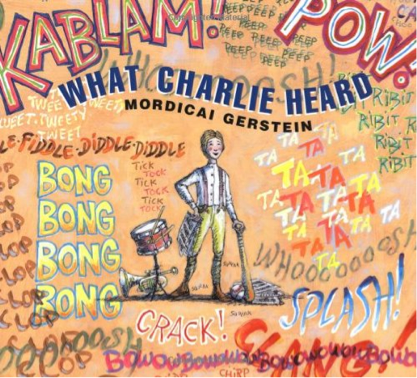
4.    What Charlie Heard by Mordicai Gerstein
What Charlie Heard
This book introduces another one of my favorite composers: Charlies Ives. It is a detailed biography of his entire life, and the author does a fantastic job of explaining how Ives received inspiration for some of his most famous pieces. The illustrations in this book are simply outstanding!  Each page is colored from top to bottom with different sound effects. My favorite part is when Charlie hears two marching bands playing different tunes during a parade—perfect opportunity to listen to Country Band March (one of my favorites from Wind Ensemble). Again, this book can be purchased with an audio version containing the music of Charles Ives mixed with the text of the book.


5.    When Stravinsky Met Nijinsky by Lauren Stringer
When Stravinsky Met Nijinsky
I’ve been looking for a good children’s book on Igor Stravinsky for a while, and I was so happy to find this one. Like Ballet for Martha, this book tells of a great collaboration between a composer and choreographer. I just love when books make it easy for me to be cross-curricular! The book is a very tasteful representation of the Rite of Spring, from its creation to the riot that occurred on opening night.


I hope you found some new composer books to use in your classroom! Do you have any other favorites? I would love to hear about them. Please share in the comments below.

6

Even More Stories and Songs!

I'm so excited to write my first post for our new collaborative blog!!!  I hope you all find it as fun and inspiring!  I know with all the other amazing teachers that will be soon be blogging I will gain a wealth of knowledge from their ideas and I hope you do too!

I'm piggy backing on Aileen and Lindsay's theme of Stories and Songs.  Song tales and books that either have a song or music connection, in the music room provide such a rich learning experience for our students.  First of all, they provide us an opportunity to sing to and for our children.  They provides an opportunity for our students to relax and enjoy a story.  The song tales are often very rich in language and vocabulary and provide a great opportunity for cross curricular learning.  And they inspire imagination!  I'm going to share three that I'm currently 

One of my favorite song tales is "The Tailor and the Mouse", adapted my John Feierabend and illustrated my John McGann:

Here's the song that I sing with my students:


2.         The tailor thought the mouse was ill, Hi diddle umkum feedle

            Because he took an awful chill, Hi diddle umkum feedle

3.         The tailor thought the mouse would die, Hi diddle umkum feedle
            And so he baked him in a pie, Hi diddle umkum feedle

4.         He cut the pie, the mouse ran out, Hi diddle umkum feedle
            The mouse was in a terrible out, Hi diddle umkum feedle

5.         He gave the mouse some catnip tea, Hi diddle umkum feedle
            Until a healthy mouse was he, Hi diddle umkum feedle

This song is great for teaching ti-tika, and I isolate that rhythm in the chorus (that way I avoid the anacrusis that my 3rd graders haven't yet studied).  Additionally, there's a great line dance that they perform with it:

Formation: two straight lines, with partners across from each other.
Action:  
1.  On the verse, the head couple sashays down the set for the first 8 counts and then back up for the second 8 counts.
2.  On the chorus, the sets "peel the banana" or "cast off", with the head couple meeting at the foot of the set.  They head couple makes a bridge and all other couples proceed under the bridge and up to the top of the set.  Play continues to the end of the song.

With this particular book, I have them learn the song and dance and then introduce the book as a closing activity in a separate lesson.

One of my all time favorite illustrators and authors is Eric Carle.  "Brown Bear, Brown Bear" and "Polar Bear, Polar Bear" can be used the same way with first grade classes:


I sing the song to them, with the following melody:


I use this for so-mi by isolating the first phrase, "Polar Bear, Polar Bear".  Every time they have a new verse start I have them use body signs for so-mi preparation.  That is, they put their hands on the head for "so" and their hands on their shoulders for "mi."  During the next lesson (and assuming that they've been doing many other so-mi preparation activities) they write the so-mi patterns on melody boxes:


I'm not sure if anyone else uses melody boxes, they might actually be an "Original Abbott Idea", but I really like using them because it helps them get the idea that they can't "stack the notes."  Or, in other words, it helps them write the melodic line horizontally.  Since I started using them I haven't had problems with students putting so and mi on top of each other, and thus forming an unintentional chord.   (By the way, the cute polar bear erasers can be found at Oriental Trading).

After writing a few different songs on the melody boxes, they easily transfer the patterns to a 2-3 line staff:

And to a 5-line staff.
(You can find these staves and more activities in my "so-mi" bundle at my TpT store.)


Finally, I'm going to be using this one with my 5th graders in a couple weeks (and yes, it might be a little "young" but they're going to be reading the melody and the rhythm and figuring out the chordal progression so hopefully that will provide a nice challenge for them: they've been reading ti for a little while now and we're about to present tim-ka):
A few years ago, when I was ROCKE president, I asked Susan Brumfield to present at our state conference.  We found this little gem in the exhibit hall and it goes perfectly to the tune of "Clementine":


Like I mentioned above, I've got to create a way for the 5th graders to "buy into it", so we'll be singing Clementine before we read this.  Additionally, in the Colorado state standards, 5th graders need to be able to read I, IV and V chords.  We'll derive the chords as a class and make a simple accompaniment that they can easily play using tone-chimes and/or Orff instruments.  From there we'll be playing a Cupid's Arrow game to reinforce tim-ka.

I hope you're enjoying this collaborative blog as much as I am!  Thanks for stopping by and don't forget to visit again soon to meet more of the contributors and to get some more ideas!

4
Back to Top