Showing posts with label Dance. Show all posts

Dancing! The Antidote for TMT (Too Much Testing!)


Hello,
This is Tanya from Teaching Music: Tanya's Kodály Aspiring Blog.
Well, it's that time of year again! What, daylight saving time? Yes, but even more unsettling, it's testing time! (I find it very interesting that we know that daylight saving time negatively affects our physical and mental health and this is when we are undergoing high-stakes testing!)

My motto for curing the fatigue of TMT (too much testing,) is to move. The more they test, the more we dance! Those bodies have been parked at desks for ninety minutes at a time in front of a screen; the release that moving provides is exactly what they need.
Here are some resources and tips when teaching dance.

Resources

New England Dancing Masters (aka The Amidons)


These materials are a must have for any music teacher. All of their books/CDs are worth owning and using but if you are new to these materials I recommend Chimes of Dunkirk to begin with; it contains many accessible dances for primary and intermediate grade levels. Rise Sally Rise (formally known as Jump Jim Joe), Down in the Valley, and I'm Growing Up contain more singing games and play parties then dances to instrumental music. They also have DVDs!

0

Dance On!

Hi eveyone - this is Karla from CMajorLearning. I am currently working with some amazing folks at Colorado State University in the Colorado Kodály Institute program where I have the privilege of teaching Level III Methodology and Folksong Research.  I cannot put into words how much I love working with fellow music collegues in this capacity!

One of my favorite Level III topics is teaching movement and dance in our general music classrooms.  If you are at all interested in this topic, I encourage you to dust off your Choksy Kodály Context book and read Chapter 3 "Movement and Dance in Kodály Practice" (page 40).  This chapter includes a brief history of dance and how it came to be in the United States - a very interesting ready.  My favorite part, however, is at the end of the chapter where Choksy has included "A Developmental Sequence for Teaching Movement and Dance via Kodály Principles" (pages 50-51).

I would like to share some of my favorite structured movement pieces (done to recorded music with no singing) that are towards the end of the sequence in the Choksy book.  I don't get to dance these much since I'm teaching K-2nd grade and so when I do get to dance them I'm pretty excited - just ask any of my former Level III students!

(in no particular order)

Zingernerpolka - a circle game from Teaching Music and Dance with the recording on Rhythmically Moving CD #2 by Phyllis Weikart

Salty Dog Rag - a partner circle game from Teaching Music and Dance with the recording on Rhythmically Moving CD #9 by Phyllis Weikart

Amos Moses - from Teaching Music and Dance with the recording on Rhymically Moving CD #8

Sashay the Donut - a double circle game with lots of sashaying from Sashay the Donut by the New England Dancing Masters

Troika - a circle dance in groups of 3 from Russia from Teaching Music and Dance and Rhymically Moving CD #2 by Phyllis Weikart

Fjäskern - can be done as a stick passing game or I just learned it as a circle game (thanks Tanya LeJune!)  Recordings can be found on Rhythmically Moving CS #2  or Dance Music for Children Level I by the Shenanigans

Borrowdale Exchange  - a mixer done in groups of 6 - as learned from Sandy Knudson, OAKE National Conference 2014

Happy dancing!!!

3

Keep 'em Busy

   
Happy May! I hope you are enjoying the last few weeks you have with your students. This is Jamie, and I’ve got just a little over a month left with my k-4th graders. In this final stretch, I have to remind myself of the best classroom management technique I have ever learned: Keep ‘em Busy!

I don’t know about your students, but mine seem to go crazy once we hit May. If they have even a few moments of down time, they take full advantage of it! My best mentor teachers have all taught me to make every second count in the classroom. Music class needs to be so engaging and fun that the students only have time to think about joyful music making.

Here are some of my favorite activities for my older students that seem to go over well during the month of May:

Magical Pattern Aural Game
This activity could be used in preparing or practicing any rhythm or melody concept. Choose one pattern to be “magical.” Since my fourth graders are currently practicing Tom Ti (dotted quarter/eighth note), I might use the pattern “Tom Ti Ta Ta” as the magical pattern.

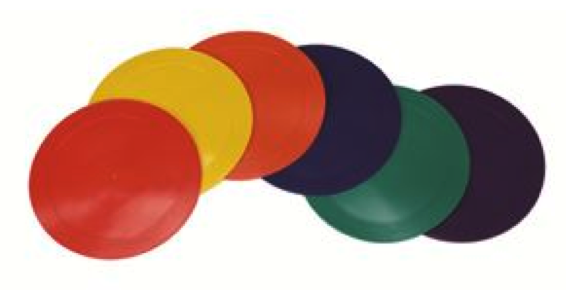
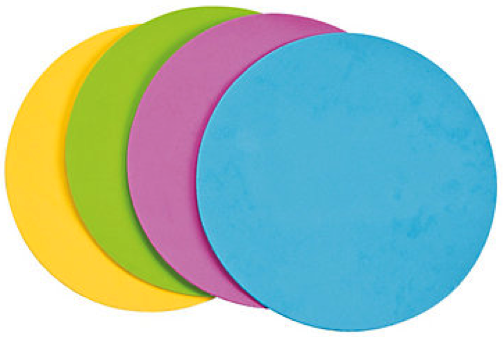
Place many circles around the room. You could use Poly Spots or even foam circles.

http://www.westmusic.com/p/west-music-ytb-013-9-round-markers-set-of-6-540079

http://www.orientaltrading.com/api/search?Ntt=IN-13639841


Then, have the students march around the room. Tap many patterns as the students march. Whenever you tap the magical pattern (Tom Ti Ta Ta), the students must stand on a circle. After each round of play, take away 3-5 circles. Those students not on a circle when the pattern is tapped are out.

 
Write Melodic Patterns with Manipulatives
I love using manipulatives in the classroom! My students love to have objects in their hands to write with, and I have found that it is super easy to assess them as they’re working. I try to have many different types of manipulatives so that the students view each writing experience as something “new.”

Right now, my students are practicing the melodic pitch fa. I purchased these small wood blocks from my local craft store:
http://shop.hobbylobby.com/products/3/4-birch-cubes-622159/


On each side of the blocks, I put a different solfa pitch (d r m f s l) with permanent marker. Then, I bagged the blocks up for my students. I am going to have my students work in pairs for this activity, so I made 15 different bags with 8 blocks each (120 blocks total).

When students are writing patterns, they will choose the pitch and show the contour with their blocks like this (pattern is from the song, On a Mountain):


You could have your students take dictation with these blocks or you could even have them compose their own patterns.


Save the best games for May
I try to save some of the all-time favorite games for the end of the year. One of the favorites at my school is Ye Toop Doram:

Game Formation: Seated in a Circle
Game Play: During the song, a ball is passed every two beats (twice per measure). Stop passing the ball on the word, “seh.” The student with the ball on the word, “seh,” goes to the middle of the circle. The other students roll the ball back and forth across the circle, trying to tag the student in the middle. The student in the middle must dodge the ball for the entire “Kel kel kel lee-a-lee-a” section. For more fun, you could add multiple balls.

 
Move, Move, Move!
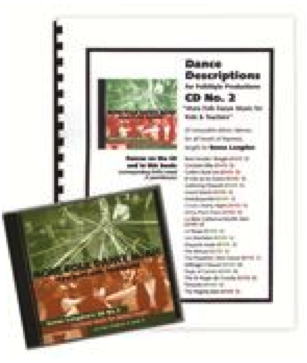
During the final month of school, I like to add more folk dances to my lessons to allow for more movement. One of my favorites is “Los Machetes” which is included in Sanna Longden’s book, More Folk Dance Music for Kids and Teachers.  
http://www.westmusic.com/p/more-folk-dance-music-for-kids-and-teachers-cd-850483
  
Perform the search, “Los Machetes Stick Dance,” on YouTube to view the dance. So much fun!


Enjoy your last few weeks of school!
    
3

Throwback Thursday: Maypole in the Music Room

Hello,

This is Lindsay Jervis, blogging from Wichita, KS.

First I wanted to share a bit of news, for celebrations, encouragement and words of wisdom that you might offer. I just found out yesterday that I was elected president-elect of Kodaly Music Educators of Kansas.  I am so excited and care so much about our organization that I hope I will be a great VP for the next two years and a good president when it is my turn.

As music teachers, we always take on so much. I just finished my Kodaly Certification last summer from Wichita State University and I am currently still working on my masters.

I have a young daughter who will turn two this summer, and will hopefully have another baby before my term is up as president. I was a little leery about whether the timing would be right for me and my family for me to accept nomination for this position, but I feel so strongly that our organization is making a difference in our teaching and in our students lives, so I feel that it is a task worthy of my time and effort.

KMEK will be super busy over the next few years as we gear up to host MKMEA in 2015, so we will sure have a lot on our plates!

I would love any advice, tips, of anything you can offer to me as I take on this new commitment in my area to bettering our organization of music teachers.

Now, on to my post!

I am going to do a little "Throwback Thursday" in celebration of May Day. You can find links to many other great "Throwback Thursday" blog posts on Aileen Miracle's blog.


This post is a throwback from my blog, Pursuit of Joyfulness written in May of last year.


When I took the job at my school two years ago, I inherited this fantastic maypole:
Apparently the maintenance people (who are amazing!) at our school made it a few years ago. The pole is a really thick pvc pipe. The ribbons are attached to a rotating bike wheel at the top. Even though it rotates, the ribbons still create a fantastic weave! Usually sand bags are placed over the boards at the base, but we could not find them. The must have walked away for something else.

Last year I did not get the maypole out because I had no clue how to do it or teach it and it seemed incredibly daunting last year. This year as May drew nearer I knew that I wanted to try it. I started researching maypole dancing.

Here were some helpful links:
http://www.maypoledance.com/maypoledance.html


And here is a link about making your own:
http://www.maypoledance.com/maypole.html

Procedures:
1. Have every student stand beside a ribbon
2. Demonstrate how to hold the ribbon (in your hand farthest away in the maypole,using your other hand to guide the ribbon over and under). I had everyone facing clockwise. Our ribbons were long enough that I told my kids that they should have a "tail" hanging down from their hand. We practiced how to make the tails longer or shorter so that the ribbons would not touch the floor.
3. The first time through we just walked in our circle. We may sure not to pass anyone and keep ourselves evenly spaced. Once I could see that was successful, we would turn and go the other way, then we would try the same thing with skipping feet.

4. Then we would number off (1, 2) and I would have my 2's (blue in picture below) stay put and my 1's (greens) got to weave in and out the 2's. I would call "under" and "over" and I modeled what that would look like for both ones and twos. Starting out we moved very slowly and I would wait til all my ones had progressed one space before I would give the next call. In a few of my classes I would have a student who would move ahead of my instructions and it would mess up the weave and we would have to restart. After that, everyone listened perfectly because the really wanted to be able to create the weave and unweave it correctly. 


My first graders were even able to do this weave! Here's a picture from one of my third grade classes. Sorry it's not the best quality but it gives you an idea. I didn't have enough kids for every ribbon, so I wound the extra ribbons around the maypole before we started the song so they would be out of the way. You can see them below the weave in the picture (blue and orange ribbons). 


Here is a link to some other weaves you could try: 

The music I used to accompany our maypole dancing was from the Amidons CD that I already owned. I did not buy any specific music for the maypole, but I just used an instrumental reel and it worked perfectly.

Please let me know if you have any additional resources for music/dances to do with the maypole!

0
Back to Top