Hi everyone! This is Jamie Parker. A week before school
began this past year, I arrived in my classroom to find five iPads sitting on
my desk. I
was thrilled! BUT I had no idea how I was going to use them with my students. I
wanted the iPads to be used in a meaningful way. I began digging for different
tools where my students could prepare and practice different elements, could
create something new, and could be assessed on known material.
One app I found for assessment is Socrative. This app allows
teachers to create their own questions and tracks all answers from individual
students. I began exploring how I could use this app with my students:
I. Getting Started
My first step in getting started with Socrative
was to create a teacher account (completely free!) on the website: www.socrative.com.
Then, I downloaded the student app on each of my
devices (also free).
Once I was set up, I tried to think of ways I
could create quizzes. I wanted my quizzes to directly reflect what the students
were learning. I realized that I could not input musical notation into my
question, but I could insert a picture (more on that below).
Hi, everyone! This is
Jamie. A few weeks ago, my district had a school improvement day, and I had a
technology professional development session. One of the topics discussed was
the use of Plickers in the classroom. Before I went to this session, I had no
idea what “Plickers” was, so I thought I would share with you what I learned.
Plickers is a student-response app that can be used to track
formative assessments. Here’s how it works:
The teacher presents a multiple-choice question
to the class.
The students respond to the question using their
own personal QR code. The students will choose the answer (either A, B, C, or
D) and point their answer in the air.
The teacher will scan the classroom using either
a smart phone or tablet to collect the data.
The app will store the data for future
reference.
The best part of Plickers is that it is FREE! Here is an
example of some collected data:
If you are interested in using Plickers in your classroom,
here’s what you can do:
Search for the Plickers app on your smart
phone/tablet and download it.
Print out the student-response QR cards on the
Plickers website. You might want to laminate them.
If you want to track individual students, add
classes to your account. You can even add the names of your students if you
wish.
Under “Library,” add questions that you will ask
your students (more on this down below).
After using the response cards in your class, use
the data collected as a helpful tool in planning or as an assessment.
Once you have an account, the app, and the individual cards,
you should be all set to go! The possibilities of using Plickers are endless,
but here are some specific music classroom ideas you might want to consider:
1. Get to know your
students’ preferences.
Plickers is an excellent tool in getting to know
your students better. If you are looking for a theme for a concert, give your
classes some choices and have them vote on a choice. If you want to know their
opinion on a piece of music they heard, have them tell you. If you want to know
their favorite instrument to play, ask them using Plickers.
Example Question: What instrument do you think
would fit this part nicely?
A. Xylophone
B. Hand Drum
C. Recorder
D. Rhythm Sticks
2. Allow your
students to self-assess.
After completing an activity, give your students
an opportunity to assess their performance level.
Example Question: Can you hear and identify
patterns with la?
A. I Can!
B. It’s getting
easier.
C. It’s still
difficult.
D. I need help.
3. Have your students
identify correct/incorrect patterns in the music staff.
Use an activity such as “Could it be mi-re-do?”
to determine if your students are correctly identifying the steps and skips
between melodic pitches.
I love to use interactive games on my
Interactive White Board, but I don’t like that only one student can give me the
answer. With Plickers, all students can answer first and then a student could
choose the answer with the most votes.
Example Question: Comes from my “Unlock the Lock
Aural Game: Quarter Rest.” The students will hear a rhythm and must choose the
correct answer. Please know that you could use any interactive game, but this
is one I have used in my classroom.
Put a list of songs on the board. If you are
preparing/practicing a rhythm concept, tap the song for the students. If you
are preparing/practicing a melodic concept, “loo” or play the song. The class
must choose the song they heard from your list.
Example Question using syncopation: Which Song
Do You Hear?
A. Canoe Song
B. Alabama Gal
C. Funga Alafia
D. Big Bunch of
Roses
Since Plickers is new to me, I am hoping to try out some new
ideas in the weeks to come. I hope you gained an idea or two that you can use,
too!
Hi everyone - this is Karla from CMajorLearning. Wow - things are in full swing for me now and I thought I would share with you what I’ve been up to this past week in my classroom!
I will start out with the professional development day held in my district this week. A bit of background info, the Canal Winchester Schools received one of 32 Straight A Grants from the state of Ohio. The purpose of the grant was to create innovative teaching using technology. We received over $850,000 to put into K-5 teaching initiatives, technology and professional development! I am fortunate enough to be on the district committee as well as the core innovation team at Indian Trail Elementary!
Now - that money will make a HUGE difference in our schools in the long term, but in the short term, the district has decided to align with the grant initiative and focus all of our professional development on project based and inquiry based learning to support the innovative teaching from the Straight A Grant. We had our first pd day this week and it was fantastic! Why am I telling you all of this? Well, I feel that as Kodáy inspired teachers, we are, for once, a little bit ahead of the curve! As I sat through the training, I was super excited to see that a lot of the teaching strategies are partially or completely in place in my classroom just because of the Kodály approach! They may be called a different name and done in a slightly different format, but this active, hands on learning is happening on a daily basis!
As a result of this training, I decided to really look at my teaching this week and see what I was doing that was supporting our district professional development goals.
First, I have been working with my 2nd graders on ta and ti-ti review super heavy. Two lessons ago we did a musical version of ‘Write the Room”.
This activity is done a lot in the regular classrooms and I decided to try it in the music room albeit, with a twist. In the activity, the students get a clipboard, pencil and recording sheet. They search the room for what they are instructed to ‘write’ from the room. In my case, I made it ta and ti-ti flashcards and they had to find them all over my room. I was so pleased to see how the students were engaged and QUIET during the activity - the loved it! You can check out the files I used at my TpT store by clicking the here.
The students wrote the room and I collected the papers to review and grade. Most students matched the correct rhythms with the correct boxes - yeah! This week, I passed back those papers and the students were asked to “Think - Pair - Share”. To make it work in the music classroom, I had the students get with a partner of their choosing (having talked about partner choosing before this was an easy task for my kids - it may not be for you if you have not done partner choosing before). I then had the students ‘think’ through their rhythms by saying them inside their heads. We then ‘paired’ and read the rhythms together one by one (there were 10 on the recording sheet). Lastly, we ‘shared’. Here is where I made a little bit of a change. My kids LOVE mystery songs so I had them do mystery patterns with their partners; one student clapped a mystery pattern (one of the patterns on their recording sheet) and then the second student had to solve the mystery by identifying the pattern that was clapped; then they switched jobs. It was AWESOME to walk the room and watch the students go through this process and see so many levels of learning taking place!
I’m going to continue this idea next week by doing some rhythm squares activities as a whole class, where students are the leaders for the entire group and then relate the patterns to known songs! A few of the kids already did this in their “Think - Pair - Share” time and they were super excited to share their discovery with me!! You can check out the Rhythm Squares activity here.
The other activity that I did relating directly to my professional development this week was with my first grade students. Unfortunately, there was no sub for the PE teacher during the afternoon on Friday. In my building the PE teacher and I work very hard at providing a related arts class for every kid every day. So when there are no subs for any of the four of us (music, pe, art and social skills), we take each others classes. Our daily schedules are the same, so this happens very easily as the classes just go to a different class when this happens. I had 2 first grade classes at a time (around 50 kids) in my room. Not being one to just put a movie in and call it a day, I decided to do something productive yet different with the classes. We went on a listening walk!
First, we read the book The Listening Walk by Paul Showers, illustrated by Aliki (click here to find it on Amazon).
I only had a small paperback copy of the book and it would have been hard for everyone to see, so what to do? Well Google it of course!!! I found a very nice youtube version of the book to project onto the smart board and everyone could see it! (click here for the link to youtube). The kids LOVED it - they were listening, laughing and making sounds right along with the story. At the end of the book, it asks the reader to just listen when they are done - so we did just that…..over 50 kids sitting in the music room absolutely still for almost a minute!!! Just listening! It was amazing!
Since it was such a nice day here in central Ohio, we then went on a listening walk around our school building - again over 50 kids walking in side by side lines around the school in silence!!! It was amazing! At the end of our walk we ended in a double circle under a shade tree. We used the same “Think - Pair - Share” strategy listed above. The students thought of 3 sounds they heard, turned to the person behind them (someone in a different class) and then shared their 3 sounds. We had odd numbers in each class so I didn’t get to walk around and simply listen to the conversations but I could hear lots of great talk while I was listening to my partner.
What activities do you do that are problem based or inquiry based? I’m only at the beginning of my learning with this but can foresee so many amazing and NEW stratigies happening in my classroom!!! Please share your experiences through the comment section below - I would LOVE to know other ideas! We can do our own “Think - Pair - Share” activity!!!
It's the first week of school. Like many of you I have 10 classes a day and the first class meeting always includes learning rules and routines. B-O-R-I-N-G! So I needed to find a way to efficiently convey important information in an engaging manner and then not think to yourself "Did I just say this?"
Our tech teacher introduced me to "Animoto". A really cool way to create videos just using graphics, pictures and text with music either you can upload, or use music from the "Animoto" files.
Sounds complicated? Not so good and faithful Kodaly teacher. I am going to enable you by
Sharing 3 different exemplars to assist in giving you ideas
Sharing a YouTube link on how to create afree(a favorite word of elementary music teachers) "Animoto" education account.
Sharing a YouTube link on how to create your first video.
Video 1 Introduction to Routines and Expectations
Taking the "Boring" out of the dispensation of necessary information. We are a "7 Habits" School where we use the "Seven Habits of Highly Effective People" embedded into our school culture, and so they are universally used by all staff throughout their classroom and lessons as you can see in the second part of this presentation.
Video 2 Introduction to Music Class-Grade 1
Before this school year, music education started in Grade 1. These kids have never had a music class and did not know even what to expect. I created this video to help first graders get the "Big Picture" of music class. In this case, I actually read the text to the kids during the video because most are just beginning to read and the text goes quickly.
Video 3 Getting Kids Fired Up for Lincoln Choir
This video actually improved the participation in getting first year choir members. Many kids can be intimidated by the unknown and this helps them get an idea of what it means to be in choir. I even use the PE teacher and a 4th grade teacher who are active musicians and sing in the community. I follow up by handing out information for choir to go home to parents. I also post this video and the information on the music classroom blog. (This is last year's video-I am still editing this year's)
Ready to try it? Here's the link to set up a free account for educators(everyone else pays a monthly fee)
Hi everyone, it's Aileen from Mrs. Miracle's Music Room. Last weekend, I presented a technology workshop for VOKE. I really enjoyed presenting the workshop, and as I was putting together materials for it, I was reminded of how anti-technology I used to be.
I admit it...years ago, when I heard the word "technology," I would shudder. It was starting to become a buzz word, something that would be hailed as the "next best thing." I had visions of active music making going out the window and being replaced by students sitting at computers using notation software. (Not that this is a bad practice all together, but I didn't want to lose the music making in my classroom!) I used to brag that I could teach only with a tuning fork. I've come to realize, though, that just because you CAN do something, doesn't mean you should.
So I guess the question boils down to this: why use technology in your Kodaly-inspired classroom? I'm stubborn in that I refuse to do something just because everyone tells me I should, which is why I was initially anti-technology. Here is my list of reasons to implement technology in your classroom:
To create an exciting, interactive environment. So many of our students are very comfortable with technology, and there are so many great things you can do with it!
To save time. This, to me, is one of the biggest reasons I use technology. While initially, it may be time-consuming to learn and make resources for a specific technology (like the SMART board), it can eventually save you time.
To create unique experiences that wouldn't be possible otherwise.
To collaborate with other teachers from around the world.
To research.
Let's start with creating an exciting and interactive environment. One of my favorite types of SMART board files is the "sentence arranger." This is a great way to teach students a new song...simply have them listen to you sing, and then have them arrange the lyrics by dragging and dropping! You can download an example for "I've been to Haarlem" here:
This week I used the "Starry Night" app to have my students brainstorm words and phrases for a "Starry Night" haiku, which they then added solfa to, notated on the staff, then transferred to the dulcimer or a barred instrument. There were so many "ooohhh's" and "ahhh's" when I projected the app from my ipad to the TV screen, and then they got more creative with their brainstorming!
You can download the app here:
How can you save time with technology? One of my favorite ways to save time this year is to hyperlink all of my files on my agenda which I project onto my SMART board, so I don't have to open multiple files in the morning before my lessons begin. I got this great idea from another music blog and of course now I can't remember whose! Read this blog post about creating an agenda; here is a picture of a sample agenda:
In the above agenda, I had a SMART notebook file for "Star Light," so when we got to that part of the lesson, I just touched the words on the SMART board, and the file opened! To hyperlink in Powerpoint, select the text you want hyperlinked, right click, choose "hyperlink," and then choose the file to which you want to hyperlink. This has been a great time-saver, between the fact that I don't have to open up a bunch of new files every morning, AND I don't have to write and rewrite anything on the board as new classes come in; I can just close the file, hit "don't save" (unless there is something I need to save), and I'm good to go!
Another great way to save time is with the "Smart Seat" app.
One of the tasks I have always loathed is creating seating charts...and this makes it SO much easier. It allows you to create charts in several different layouts, take pictures of each child, print out the seating chart to yourself, and so much more!
GarageBand is a GREAT way to create musical experiences not otherwise possible. You can now download GarageBand for free with in-app purchases. See more by clicking below:
I'm not an expert at GarageBand, so here is a great tutorial from Music and Technology you can purchase:
This book has also been very helpful; click the picture to see it on Amazon.
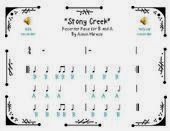
Maybe you're thinking, "I can't have my students use GarageBand...I only have one ipad!" You might consider working in learning centers, and you can also use GarageBand to create accompaniments and songs for your students to listen to or play along with. I created this recorder song and accompaniment on GarageBand that you can download for free for your beginning recorder students learning B and A:
As far as research goes, I LOVE using the Holy Names Kodaly website to search for folk songs! It is like an index many of us had to complete for our levels...but it is online and free! Click here to check it out. You can also read Christopher Roberts' thoughtful blog post on the Kodaly Corner about using the Smithsonian Folkways website to research folk songs from around the world.
This is just a sampling of technology ideas for your classroom that could be added to your Kodaly-inspired lessons to make them even more magical. Have any other ideas? Please comment below (and check out some tips for using Twitter I recently posted at my blog!)
Hi everyone! This is Aileen from Mrs. Miracle's Music Room. Today, instead of writing about strategies to use in your music lessons, I thought I'd share a story about my recent trip to Mexico, which gave me some perspective about music of other cultures.
My husband Scott and I were fortunate enough to visit the island of Isla Mujeres over Spring Break, which is close to Cancun, Mexico. Here is one of my favorite pics from the vacation:
Yeah, pretty amazing!
But I'm not posting this blog to brag about my wonderful vacation....I had a very interesting experience that I think only a music teacher--especially a Kodaly-inspired music teacher--can appreciate, one early morning at the hotel.
I woke up to the sound of kids. In my dreary state, I didn't really know what was going on, but then heard someone over a loudspeaker--someone who was evidently trying to organize the kids or give them directions. We were staying at a mostly adult resort, so I had a hard time making sense of what the noise could be.
So I stepped out onto the balcony. Here is the view that we normally saw from our balcony:
I didn't really think about why there was a basketball court there...until I realized, looking out over the balcony at a couple hundred kids, that it was a school! Here is a picture sans kids...
...and here is a picture with all of the students participating in this early morning assembly!
Soon after I peered out over the balcony, music began playing from the loudspeakers...music that, to me, seemed patriotic. Brass music poured out of the speakers, and soon the students were all singing along.
I had to laugh myself...I came all this way to be across the street from a musical assembly in Mexico? Most people would have been annoyed by the noise (which started at 7:15 in the morning, early by American school terms!) but I was enthralled. I got out my phone and as inconspicuously as I could, started videotaping what I saw. I did this not to share it on any blog, but so I could watch it later (and as you'll read later, this came in handy!)
The music continued for a while, interspersed by periods of talking. At this point, I was cursing myself that I didn't know any Spanish...it would have really come in handy! But it seemed to me that the students were all familiar with the music (although, at times, some of them were shouting instead of singing...an all too common problem anywhere!) They also seemed very familiar with the routine. At one point they seemed to be reciting something, which reminded me of our Pledge of Allegiance.
The students in the school were in uniforms--all in white tops with different bottoms--but soon, students dressed all in white started marching with a flag to the music. Their movements were very formal and rehearsed. I could only guess this was a well known and understood ritual.
After this, students sang another song. This was followed by talking over the loudspeakers. The students seemed to relax a bit, and then other students started setting up for a play. The students, although chatty here and there, were very well behaved, especially since there were very few adults in the courtyard!
This whole experience led me to quite a few questions. This was our first weekday in Mexico. Was this a daily ritual? It seemed like a special occasion to me. I also was very curious which songs they were singing, and if they performed plays on a regular basis.
Thanks to the internet and to technology in general, I soon received many answers!
My husband mentioned that he had read reviews about the resort, and that one of the guests had complained about a noisy school assembly, but the hotel had replied that this only happened on special occasions. After googling the date (March 31) and Mexican holidays, I found out it was Cesar Chavez's birthday!
Now onto the music...how could I figure out which songs they were singing? I tried to google Mexican patriotic songs but wasn't really getting anything back. Then I remembered the free app "SoundHound."
This app can sometimes identify songs from the radio. Say you hear a song you really like but don't know the title or artist...SoundHound can usually identify these songs...but for more obscure music, I have seen the response "no entries found." I played the video from my phone and put my Ipad right next to it with SoundHound running. I had little to no hope that this would work...but it did!!!
The first song was "Marcha de Honor D.P." by Banda de Guerra de las
Guardias Presidenciales. After some research, I realized this was indeed the Mexican Pledge of Allegiance!
The second song was "Himno Nacional Mexicano" by Orquesta Sinfonica
Nacional...the Mexican National Anthem!
I was thrilled to not only find these titles, but to realize that regardless of my lack of Spanish, my instincts were right. Music truly can transcend language!
After doing some searching on You Tube, I found these videos:
Marcha de Honor (Honor March, or Mexican Pledge of Allegiance):
This was very similar to what I saw in the courtyard (although what I saw was even more formal.)
I also found this--the National Anthem of Mexico.
So besides this being an interesting story to tell, why am I blogging about this?
It occurred to me, as I was standing on the balcony, looking at this assembly of singing children, that I was lucky to be watching this. How often do you get such a view into a different culture? How often do teachers get to see how schools in another culture operate?
But more than that, I thought I could improve my teaching with this experience, by:
Discussing how other countries have national anthems when teaching the "Star Spangled Banner" (and discussing this very experience)
When discussing patriotic music, and reflecting on the difference between the Pledge of Allegiance and the "Star Spangled Banner," discussing this experience as a way to make students understand that other countries have similar customs
Comparing and contrasting the customs of our culture vs. other cultures. It is important to not only discuss the differences between cultures but the similarities. This experience is perfect for this. We could discuss the differences (different music, different customs with the students marching) and the similarities (students were familiar with the music, students were proud of the music, etc.)
Having students who are from other countries share their musical customs as they are comfortable
More than that, the experience made me realize how aware I need to be when I travel. You never know when you are going to have the chance to observe and collect music of other cultures. In fact, it made me more motivated to observe and collect the music of my own students--whether it be by listening to hand jives the students are doing while waiting in lunch line or listening to jump rope games while I am on recess duty.
As Kodaly said, "To write a folksong is as much beyond the bounds of possibility as to write a proverb. Just as proverbs condense centuries of popular wisdom and observation, so, in traditional songs, the emotions of centuries are immortalized in a form polished to perfection."
I hope you continue to listen around you, whether you are on recess duty or on vacation! Have a great week!




.jpg)


